
Choosing the right Wi-Fi router can make a noticeable difference to your internet experience, especially if you have a broadband or fibre connection at home.
Two popular budget AC1200-class routers are the TP-Link Archer C6 and Tenda AC10. Both offer dual-band Wi-Fi, Gigabit Ethernet and features aimed at homes with multiple connected devices.
But which one should you actually buy?
In this comparison, we look at TP-Link Archer C6 vs Tenda AC10 across features, performance, coverage, connectivity, ease of use and value for money.
Quick answer: The TP-Link Archer C6 is our preferred choice if the prices are close because of its overall feature set and Gigabit connectivity. The Tenda AC10 can be an attractive budget alternative when it is available at a significantly lower price.
TP-Link Archer C6 vs Tenda AC10 – Quick Comparison
| Feature | TP-Link Archer C6 | Tenda AC10 |
|---|
| Wi-Fi class | AC1200 | AC1200 |
| Wi-Fi bands | Dual Band | Dual Band |
| 2.4GHz | Up to 300 Mbps | Up to 300 Mbps |
| 5GHz | Up to 867 Mbps | Up to 867 Mbps |
| Gigabit Ethernet | Yes | Yes |
| MU-MIMO | Yes | Yes |
| Beamforming | Yes | Yes |
| IPv6 support | Yes | Yes |
| External antennas | 4 | 4 |
| Best suited for | Home & broadband users | Budget home networking |
| Overall rating | ⭐⭐⭐⭐½ | ⭐⭐⭐⭐ |
Actual performance depends on internet connection, device compatibility, distance, walls, interference and other network conditions.
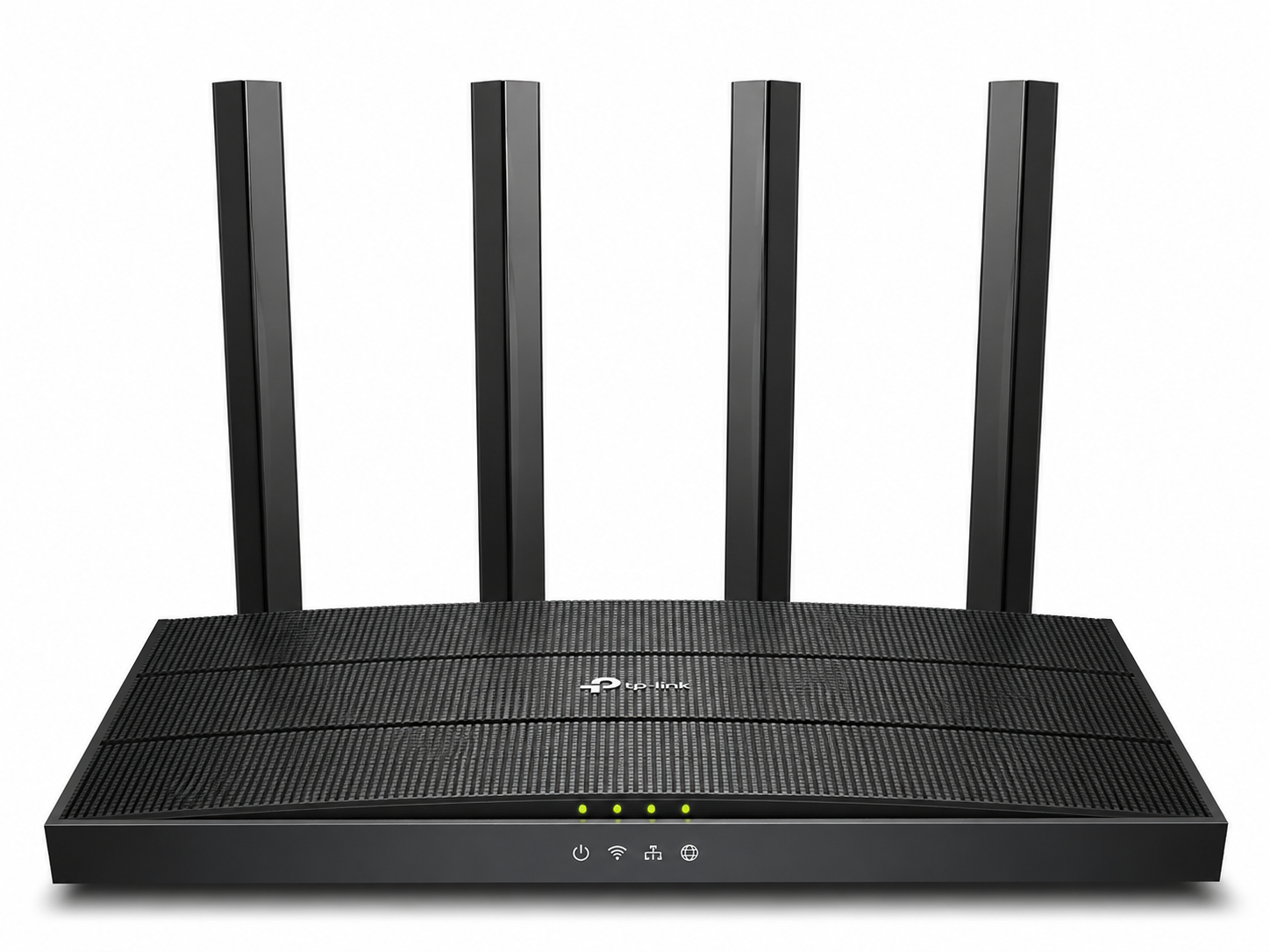
🏆 Our Pick: TP-Link Archer C6
If both routers are available at similar prices, we would lean towards the TP-Link Archer C6.
Why?
- AC1200 dual-band Wi-Fi
- Gigabit Ethernet connectivity
- MU-MIMO support
- Beamforming
- Good option for fibre broadband
- Suitable for multiple connected devices
- TP-Link’s established networking ecosystem
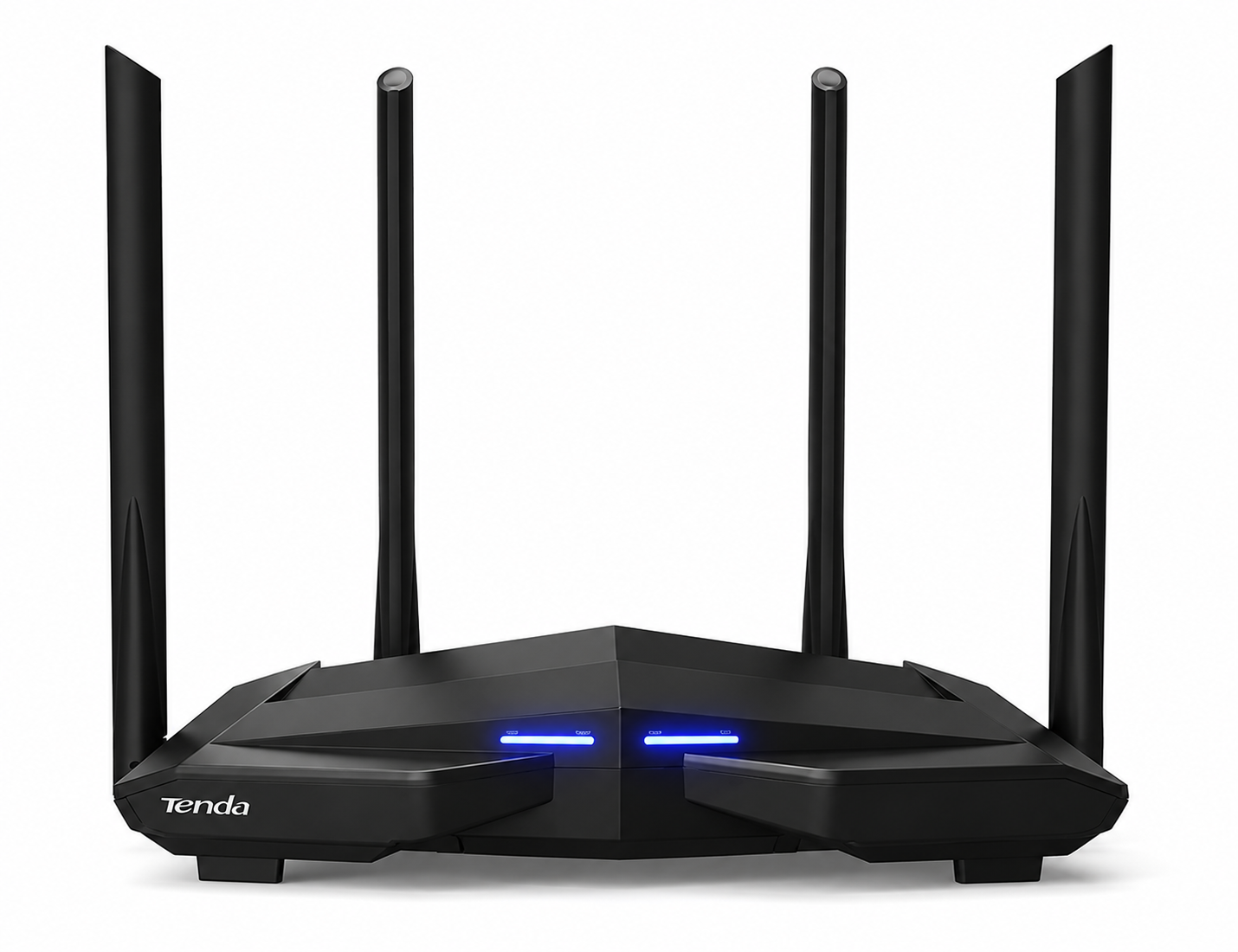
Tenda AC10 – Best Budget Alternative
The Tenda AC10 is worth considering if you find it considerably cheaper than the Archer C6.
It provides an AC1200 dual-band wireless experience and Gigabit Ethernet connectivity, making it suitable for many homes using fibre broadband.
Why consider the Tenda AC10?
- AC1200 dual-band Wi-Fi
- Gigabit ports
- MU-MIMO
- Beamforming
- Four external antennas
- Attractive budget option
TP-Link Archer C6 vs Tenda AC10: Design
Both routers follow the familiar design of modern home Wi-Fi routers, with multiple external antennas designed to improve wireless coverage.
The Archer C6 has a compact design that can easily be placed on a desk, shelf or other suitable location.
The Tenda AC10 also uses four external antennas and is designed for home networking environments.
For most buyers, design should not be the deciding factor.
Winner: Tie
Both are practical budget routers.
Wi-Fi Performance
This is probably the most important part of the comparison.
Both routers belong to the AC1200 class, meaning they support two wireless bands:
2.4GHz
Useful for:
- Longer-range connections
- Smart home devices
- Basic browsing
- Devices located farther from the router
5GHz
Better suited for:
- Higher-speed connections
- Streaming
- Video calls
- Gaming
- Devices located closer to the router
The theoretical combined wireless speed is around 1200 Mbps, but this does not mean you will receive 1200 Mbps internet speed.
Actual speeds depend on your broadband plan, connected device, Wi-Fi interference, distance and walls.
Winner: Tie
On paper, both are AC1200-class dual-band routers.
Gigabit Ethernet: An Important Advantage
If you have a fast fibre connection, Ethernet port speed matters.
Both the Archer C6 and Tenda AC10 provide Gigabit Ethernet connectivity, making them much more suitable for modern broadband connections than older routers limited to 100 Mbps Ethernet.
For example, if you have a high-speed fibre plan, a Gigabit router gives you much more headroom than a basic 100 Mbps router.
Winner: Tie
Both offer Gigabit connectivity.
MU-MIMO Support
Modern homes can have many connected devices:
- Smartphones
- Smart TVs
- Laptops
- Tablets
- CCTV cameras
- Smart speakers
- Streaming devices
- Gaming consoles
MU-MIMO technology can help compatible devices communicate more efficiently with the router.
Both the TP-Link Archer C6 and Tenda AC10 support MU-MIMO.
Winner: Tie
Both offer MU-MIMO support.
Beamforming
Beamforming is another useful wireless feature.
Instead of transmitting the wireless signal without considering the location of connected devices, beamforming technology can help focus wireless transmission towards compatible devices.
This can potentially improve wireless performance and reliability in suitable environments.
Both routers support beamforming-related wireless technologies.
Winner: Tie
Which Router Is Better for Fibre Broadband?
If you have a fibre broadband connection from providers such as:
- JioFiber
- Airtel Xstream Fiber
- ACT
- BSNL Fibre
- Local ISP
- Other FTTH providers
both routers can be considered, provided the router is configured correctly for your ISP.
For broadband speeds above 100 Mbps, the Gigabit Ethernet capability of these routers becomes particularly useful.
However, remember that the router does not automatically increase the speed of your internet plan.
If your ISP provides 100 Mbps, buying a router advertised at 1200 Mbps will not turn the connection into a 1200 Mbps internet connection.
TP-Link Archer C6 vs Tenda AC10 for Gaming
For casual gaming, both routers can be used.
However, online gaming depends on much more than the router’s advertised Wi-Fi speed.
Important factors include:
- Internet latency
- ISP routing
- Server location
- Wi-Fi interference
- Distance from router
- Wired vs wireless connection
- Number of active devices
If possible, connecting a gaming PC or console using Ethernet can provide a more consistent connection.
Our choice
TP-Link Archer C6
Not because its AC1200 rating is dramatically different, but because it offers a strong overall feature package for home networking.
Which Is Better for a 2-Bedroom Home?
For a small or medium-sized apartment, either router can be suitable.
However, Wi-Fi coverage cannot be guaranteed simply by looking at the router’s antenna count.
Actual coverage depends on:
- Apartment size
- Wall thickness
- Router location
- Floor plan
- Interference
- Number of neighbouring Wi-Fi networks
- Connected devices
Recommendation
For a normal apartment, start with either router.
If you have a large multi-floor house, consider a mesh Wi-Fi system instead of expecting a single budget router to cover every room perfectly.
TP-Link Archer C6 – Pros & Cons
Pros
- AC1200 dual-band Wi-Fi
- Gigabit Ethernet
- MU-MIMO support
- Beamforming
- Good choice for fibre broadband
- Suitable for multiple connected devices
- Strong overall value when competitively priced
Cons
- Not a Wi-Fi 6 router
- Real-world speed will be lower than theoretical wireless figures
- Large homes may require a mesh system
- Older AC-class technology compared with newer Wi-Fi 6/6E/7 products